





text Martina Olivieri



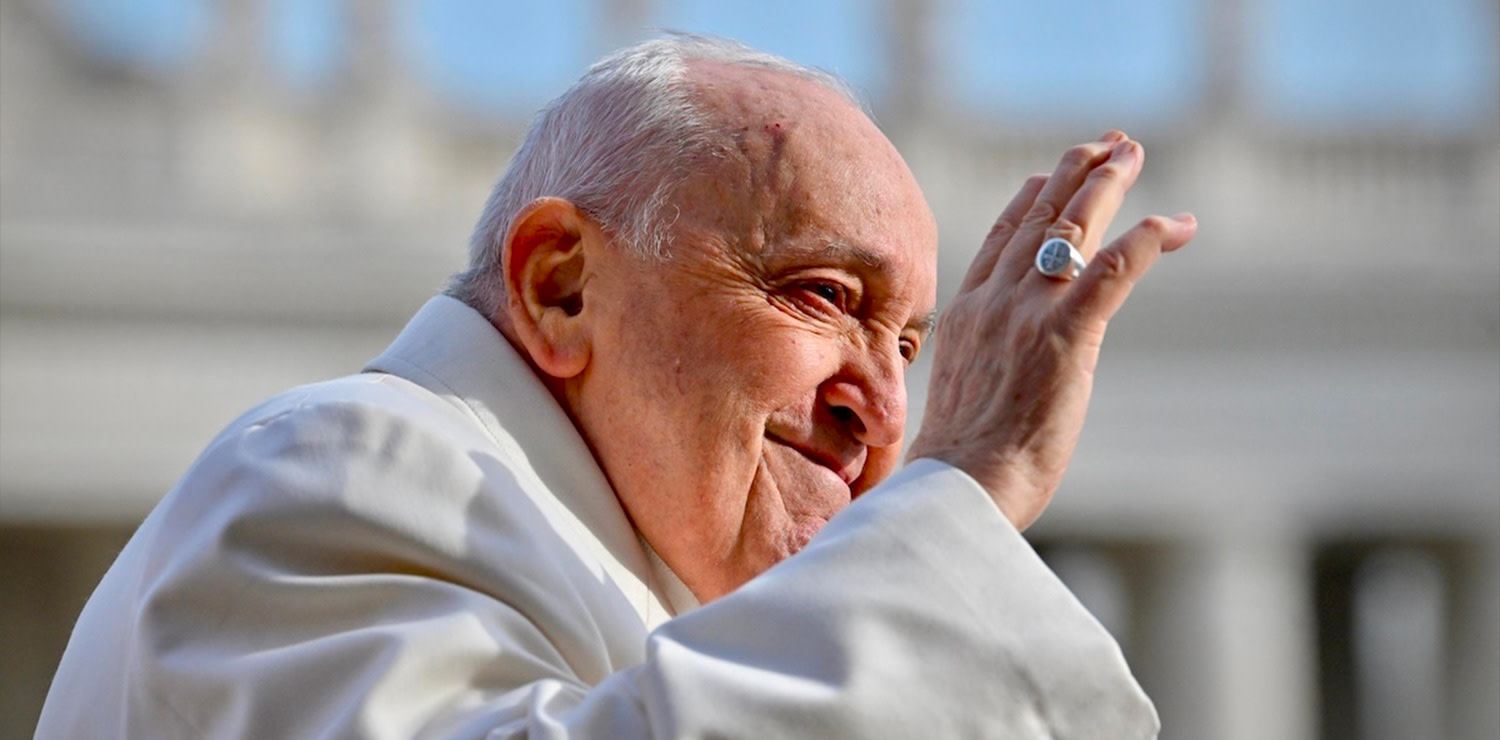
Pope Francis is dead: what happens now
Funerals, the Novendial period, and the election of a new pontiff: everything that happens when a pope dies
Pope Francis, born Jorge Mario Bergoglio, has passed away after more than eleven years of a pontificate marked by a deep commitment to interreligious dialogue, peace, and the rights of the marginalized. He was the first Pope from the American continent and the first to take the name Francis, in homage to Saint Francis of Assisi.
With his passing, the Catholic Church officially enters the Sede Vacante—the period of vacancy before a new Pope is elected. It is a solemn and delicate moment, governed by ancient and precise rules that blend ritual, spirituality, and governance.
The death of the Pope is communicated to the Camerlengo—currently Cardinal Kevin Farrell—who is responsible for officially confirming the death. This is followed by the breaking of the “Fisherman’s Ring,” the symbol of papal authority, and notification to the governing bodies of the Holy See.
The world is then informed, with solemnity and sobriety, that the Pope has died. Church bells toll in mourning, and the faithful gather in prayer. The body of the Pontiff will lie in state in St. Peter’s Basilica, where the public may pay their respects in a long and heartfelt farewell.
Pope Francis had simplified the funeral rites. The traditional three coffins—of cypress, lead, and oak—will be replaced by a single wooden coffin, zinc-lined on the exterior.
The funeral will be held in St. Peter’s Square on Saturday, April 26 at 10 a.m., presided over by the Dean of the College of Cardinals, Giovanni Battista Re, and broadcast around the world. Traditionally, Popes are buried in the Vatican Grottoes alongside their predecessors. However, the final decision belongs to the Pope himself. In his will, dated June 29, 2022, Francis requested: “Let my tomb be in the side nave of the Basilica of St. Mary Major, simple and without decoration. Only the inscription: Franciscus.”
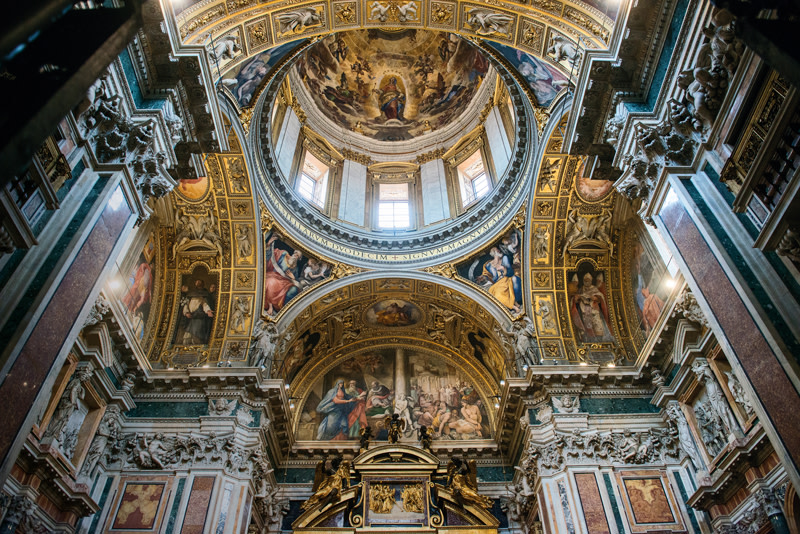 Basilica di Santa Maria Maggiore
Following the solemn funeral, the Novendiali begin—nine days of mourning during which Masses are celebrated in memory of the deceased Pope. Hundreds of thousands of pilgrims from around the world are expected to arrive in Rome.
After the mourning period, and no later than twenty days after the Pope's death, the Conclave will officially begin. The cardinal electors—those under the age of 80—will gather in the Sistine Chapel to choose the next Pope, following an ancient and secretive procedure.
 Cappella Sistina
During the Conclave, each cardinal writes the name of their chosen candidate on a ballot. The ballot is then folded and placed in an urn. After the vote, all ballots are carefully counted and scrutinized. If no candidate receives the required two-thirds majority, the ballots are burned, producing black smoke that rises from the Sistine Chapel chimney—signaling to the world that a new Pope has not yet been elected.
When a cardinal obtains the necessary majority, the ballots are burned with special dry straw, producing the iconic white smoke—the sign awaited by millions of faithful across the globe, announcing that a new Pope has been chosen.
At that point, the Protodeacon steps out onto the central balcony of St. Peter’s Basilica and proclaims the solemn formula: Habemus Papam, revealing the name of the new Pontiff. Moments later, the newly elected Pope appears before the public for the first time and imparts the Urbi et Orbi blessing.