





text Francesca Lombardi
photo © Governatorato SCV – Direzione dei Musei



Discovering the Sistine Chapel
A casket of beauty that has enchanted the world for centuries and guards the secrets of the Papal Conclave
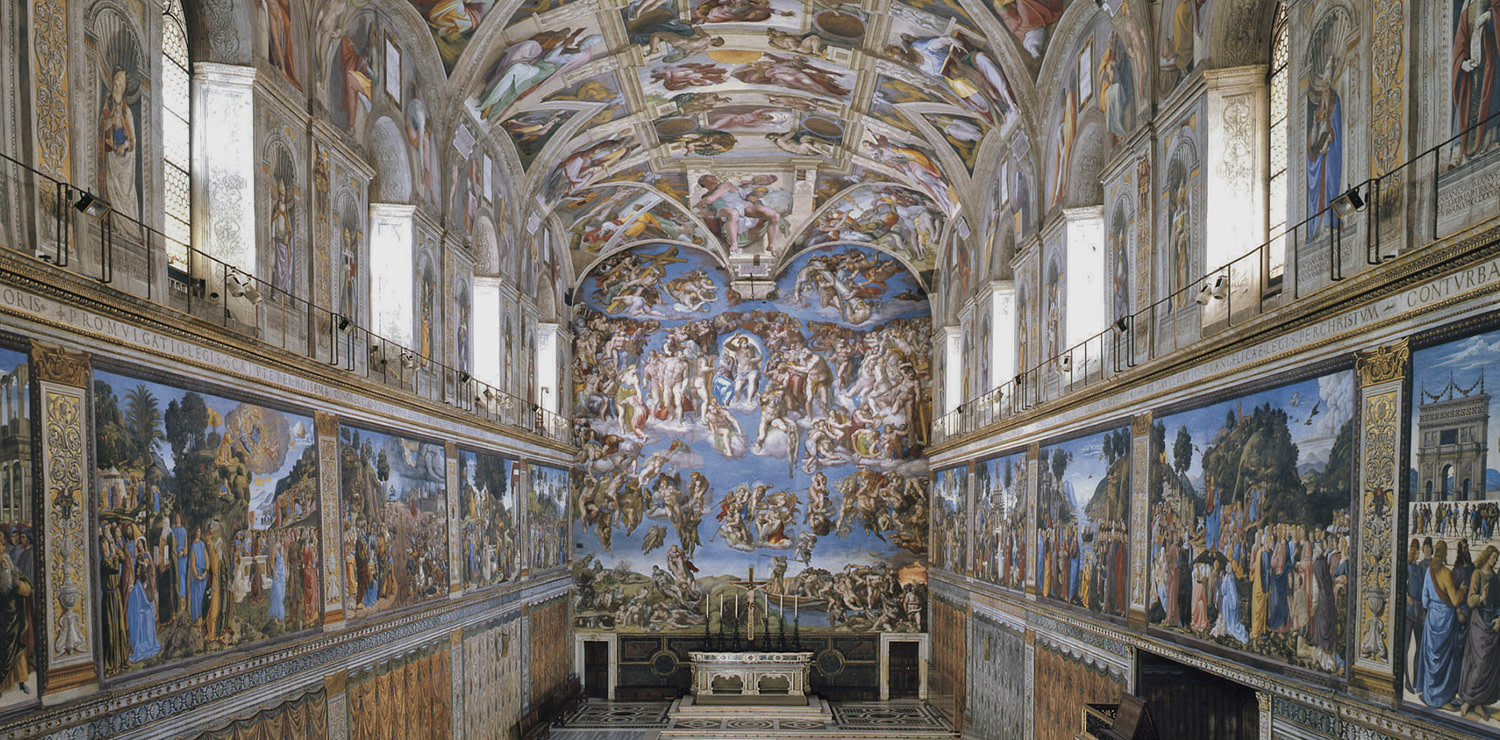
2014: the 450th anniversary of Michelangelo’s death. The Vatican Museums, in keeping with the sobriety required by the present moment, have chosen to honor this event with something of a durable and not ephemeral nature: the introduction of state-of-the-art air conditioning and a new lighting system, in order to better preserve and illuminate Michelangelo’s creations and the other wonderful frescoes that decorate the Sistine Chapel’s ceiling and walls. It took three years of painstaking work, three years of close collaboration between the Museums’ curators and the technicians of Carrier and Osram, the two world-leading companies who offered their help with no ulterior motive other than mere generosity. Now the Sistine Chapel shines with a brighter glow and has been reopened to the public. It would be reductive to say that visitors come in great numbers: about six million people visit the Sistine Chapel every year, even twenty-thousand a day in periods of especially large attendance. That is why it was absolutely necessary to better preserve the artwork by introducing an advanced ventilation system, by regulating temperature and humidity inside the chapel and using filters to remove dust and CO2 brought in by the many visitors. The new lighting system, while throwing light on all frescoes and not only on Michelangelo’s masterpiece, is delicate, non-invasive and totally respectful of the chapel’s complex iconographic, stylistic and historical characteristics. It also offers visitors a much better and more objective viewing experience of the frescoes covering the chapel’s ceiling and walls. This experience of “beauty in its totality” is a theme that Antonio Paolucci, the director of Vatican Museums, is especially fond of. We asked him to describe these new installations and explain how they have changed the Sistine Chapel.
 Cappella Sistina
The Sistine Chapel: a museum and much more. As Pope John Paul II said in 1994, upon completion of the restoration works on The Last Judgment: “The truths of our faith speak to us here, from all sides”. Where does the pictorial beauty end and the sacredness of the place begin?
I call it the chapel of the world: a place of Catholic identity, but also an anthology of the great Italian Renaissance painting. And the two aspects enhance one another: this is the place where major liturgical events are held, but also a treasure box filled with pictorial masterpieces. A unique place, a highly emotional experience for all visitors.
“New breath and new light”, as you put it. What have these works given the Chapel back?
The new ventilation system ensures a longer life for the Sistine’s masterworks, while the new lighting system makes visitors happy, as they can see the frescoes with new eyes. And, what’s more, the new lighting makes even art historians, including myself, happier, as we can, at last, admire the wonderful frescoes by thirteenth-century artists Botticelli, Perugino, Ghirlandaio, Bartolomeo della Gatta, Signorelli, in all their splendor. Artists who worked for Pope Sixtus IV in the early 1480s and have never been as visible and enhanced as they are now. The Last Judgment used to leave everything else in the shade, and nearly no one noticed Botticelli’s frescoes, almost six times the size of the Primavera, which tourists flock to see at the Uffizi Gallery. Fortunately, the new 7000 LED lights have changed things.
 Cappella Sistina
The Chapel’s most moving figure, the one that captures your last glance before leaving….
The masterpiece by Pietro Perugino Tibi Dabo Claves (I will give you the keys). A beautifully balanced painting, as well as the symbol of this place: it represents Christ handing the keys to St. Peter on his knees before him.