





text Teresa Favi
photo Umberto Pizzi



Umberto Pizzi, the tough and pure paparazzo
Our interview with the great photographer who captured the golden years and the end of La Dolce Vita
“I’ve just turned 83 and I’m still going strong”, begins Umberto Pizzi, one of the most notorious paparazzi of Rome’s Dolce Vita years, in a pleasant baritone. “I’ve always been tough and pure: I love being a photographer, but I love being a decent person more”. Umberto was born in Zagarolo to a modest family: “As a kid I wanted to become an artist, but I wasn’t allowed to. I had a little bellows camera, and I started taking photos. Tree roots, old people’s faces… gradually I realised that a good photo could condense all the things I loved: literature, art, music”. After the war the family moved to Rome. And that’s where it all beg.
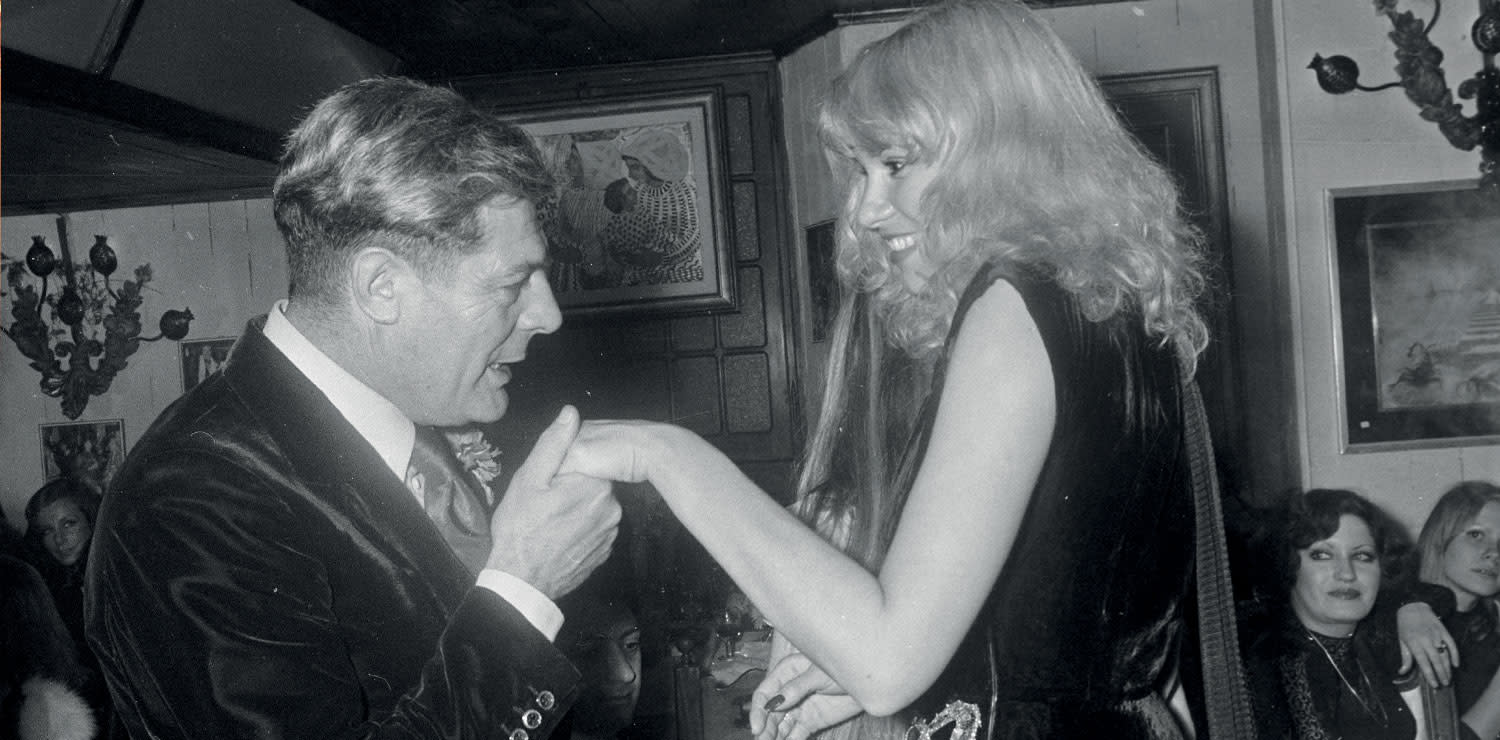
 Ursula Andress and Marcello Mastroianni guests of the ‘Festa in Bianco’ (white party) at the famous Club Jakie O, Rome, in 1975
How did you become a photographer?
I needed money to get started, but my family was working class and we didn’t have any. Then I met a photo editor who worked at the FAO. So I was sent to the Middle East, where I spent three years working on a project against world hunger, among Bedouins in the desert, children trained as guerrillas, Kurdish refugees, Turkish miners and a lot of hunger. Iraq, Iran and Turkey. The money was poor, and in the end I went back to Rome.
To fulfil your destiny?
In the late 50s and early 60s Italy was going into the economic boom and Rome was full of American actors. They’d realised that it was more convenient and pleasant to film at Cinecittà, so Rome became a kind of Hollywood on the Tiber. At the start of the 60s they were making La Dolce Vita in Via Veneto. I had an offer from the American magazine Picture Editor, so I left the FAO and came to Via Veneto. Miss Boots at the Picture told me: “Do me a feature on the paparazzi”. That was the first time I heard the word. I followed them around for three months and came to the conclusion that you can earn good money as a paparazzo.
What kind of paparazzo were you?
A lone wolf, but I was fast, observant and intuitive.
If a celebrity set off in a car, I’d take note of how they sat and try to predict how they’d get out of the car. I was fascinated by the photographic potential of a habitat occupied by Elizabeth Taylor, Sophia Loren, Mastroianni; legendary figures. And in those days they didn’t yet have bodyguards, you’d meet actors in the street, they’d wander around central Rome alone, and I had a great personal relationship with many of them.
Was the response good?
Television wasn’t yet widespread, but magazines sold like hot cakes. You’d photograph a celebrity and boom! That was it. I was hired to the sound of dollars, like when I snapped Sophie Loren and Ettore Scola, who had fallen for each other on the set of Una giornata particolare. She never forgave me for that shot, and years later she got her revenge by getting me locked up for three days on a Caribbean island I’d followed her to, where she was filming.
So you had to be on your toes…
Of course! One time I spent all day perched in a pine tree to get a photo of Liz Taylor and Richard Burton.
Ever get into a fight with a star?
It happened, yes. I used to react badly if anyone laid hands on me. I’ve always been calm, I hate violence. Once Mick Jagger’s bodyguards threw me against a taxi, which was a stupid thing to do. Roman Polanski and Gérard Depardieu have both been angry with me too, because I caught both of them flirting with their sweethearts.
Tell us about some of the people from those days. Anita Ekberg was a darling, Onassis was a troublemaker; he felt like a king in Monte Carlo. Then there was Marcello Mastroianni… Everyone was convinced he was a lady-killer, but in fact it was he who was harassed by women. Blondes especially went crazy for Marcello. On the film set his mother, an old Roman lady, used to say to him: “forget about them, they’re all sluts”.
Is that era over?
I’ll tell you about a photo of mine, the one that earned me the most money. I took it at dawn on an August day in 1990 in Venice, in the palazzo of Count Volpi di Misurata, during a birthday party for the daughter of Maria Gabriella of Savoy. Countess Francesca von Thyssen turned up around three in the morning wearing a dress with a long colourful train, which her boyfriend suddenly picked up… it wasn’t Dolce Vita anymore, it was something different. The age of the cafone had begun. That photo made me 150,000 dollars, and it also marked the end of the Dolce Vita.