





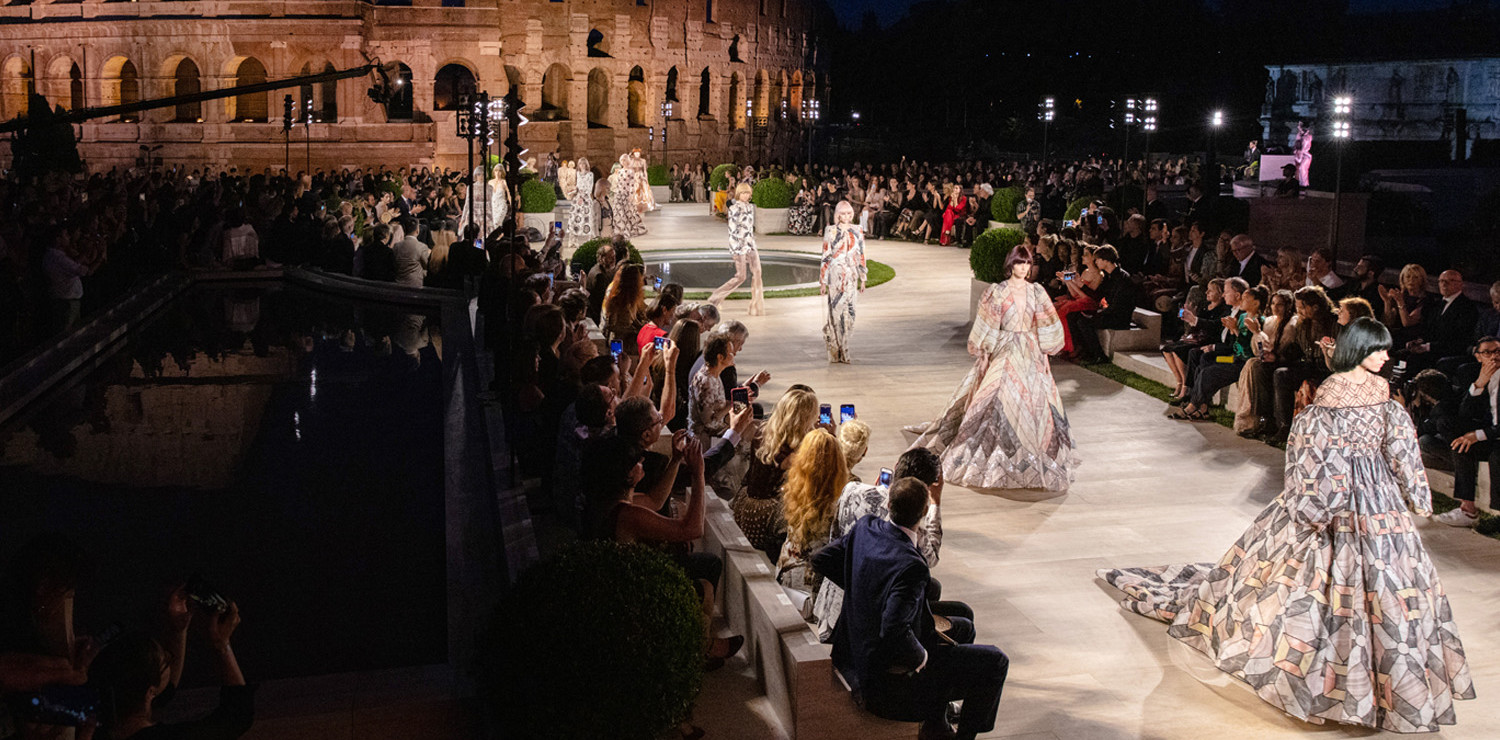
text Marta Innocenti Ciulli photo courtesy Fendi



100 years of fashion
An unusual blend of luxury, lightness, craftsmanship and irony
Two interlocking Fs, short for Fun Fur – a logo that’s hard to miss. It’s the unmistakable hallmark of Fendi, the Roman maison where savoir-faire lies at the heart of everything. A craftsmanship now on show in the Rome boutique, where, behind a pane of glass, artisans can be seen at work – like chefs in an open kitchen.
It all began in 1925, when Adele Casagrande, together with her husband Edoardo Fendi, opened a small leather goods and fur shop in Via del Plebiscito, Rome. In no time, it became a reference point for Rome’s haute bourgeoisie. Adele had a pioneering spirit, a nose for shifting tastes, and a forceful, feminine energy. As early as the 1930s and ’40s, her furs stood out for that subtle something more – or something less – that made them different.
 Tokyo Show at Orchard Hall in 1996
 She had hoped her daughters would choose a peaceful life, split between study and family. But Alda, Anna, Paola, Franca and Carla decided, instead, to join her in the shop with enthusiasm. “Remember,” she told them, “you are like the fingers of a hand: together, you are strong; divided, you count for little.” And so it was. With taste, determination and a noble form of humility, they gradually entered the business after the Second World War, each bringing new ideas and fresh vision – just as the Italian economic boom was taking off. In 1958 came the first fashion show: The Collection of Love. In 1964, the first boutique opened in Via Borgognona, but the turning point arrived in 1965 with the arrival of Karl Lagerfeld – a young, brilliant and slightly temperamental designer. It marked the start of the longest creative partnership in fashion history: a full 54 years. Lagerfeld revolutionised fur. He made it light, modern, playful. With inlays, weaves, vibrant colours, fur became almost like fabric. He reimagined leathers once deemed humble and experimented with new tanning techniques. He transformed a status symbol into everyday wear – and he created the iconic double F, initially used for linings, that would later become the official logo. In 1969, in Florence, Fendi presented its first ready-to-wear fur collection in the Sala Bianca of Palazzo Pitti. The team’s motto? Nothing is impossible.
Meanwhile, the bond with cinema grew stronger, with creations designed for both Italian and international films. In 1977, the first Fendi and Lagerfeld ready-to-wear collection was launched, followed by accessories such as scarves, gloves, ties, sunglasses and watches.
 Fendi sisters and Karl Lagerfeld, 1986
In 1985, Rome celebrated 20 years of collaboration with Karl through an exhibition at the Gallery of Modern Art. That same year, the first fragrance – Fendi – was launched. Its success was global: in 1989 the first American boutique opened in New York, and the homeware line made its debut. In 1990, the menswear line was launched with the Spring/Summer 1991 collection, a tribute to Edoardo Fendi’s understated elegance. Despite Italy’s economic crisis in the 1990s, Fendi continued to thrive, thanks also to the arrival of its now-iconic handbags. At this point, a new generation entered the scene. Silvia Venturini Fendi, daughter of Anna, took the reins of the design office. She is the mind behind the Baguette: a rectangular, essential, chameleonic bag to be worn under the arm ‘like a loaf of bread’, with a short handle, double F, and central clasp. It became a global cult item – and a collector’s piece. In 2005, Palazzo Fendi opened in Rome – the largest mono-brand boutique in the world. In 2008 came the Peekaboo, a bag with a discreet, sophisticated style where the interior and exterior are equally important. In 2015, the maison moved its headquarters to the Palazzo della Civiltà Italiana in the EUR district: a symbolic building whose first floor now hosts exhibitions and installations.
 Fendi Factory for leathergoods Capannuccia in Tuscany, 2023
In 2020, Kim Jones was appointed Artistic Director of couture and womenswear. Alongside him, Delfina Delettrez Fendi – Silvia’s daughter – took on the role of Artistic Director of Jewellery, bringing a new creative direction infused with the family’s vision. The grand centenary show, unveiling the Autumn/Winter 2025-26 collection, celebrates four generations of extraordinary women who transformed a small Roman workshop into a global icon of elegance, innovation and Italian craftsmanship.